
How did the earliest burials preserve the bodies of the dead without intervention?
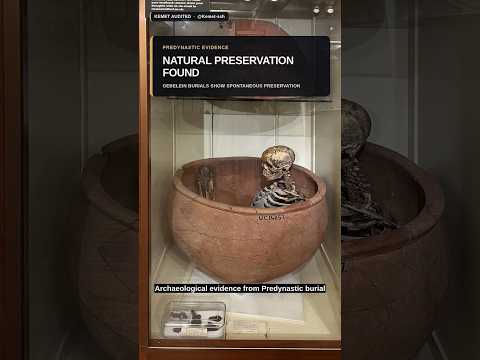
Before the rise of the complex funerary workshops that would eventually define the Egyptian mortuary landscape, the desert environment itself acted as the primary preservation tool for ancient communities. According to the Smithsonian Institution and The Australian Museum, these early people did not rely on artificial chemical intervention; rather, they interred their deceased in shallow pits dug directly into the hot, dry desert sand. This specific environment facilitated a natural process of desiccation. The sand, being extremely arid and hot, acted as a powerful drying agent, drawing moisture away from the soft tissues of the body before the natural processes of decay could effectively take hold. This allowed the remains to become naturally preserved, essentially freeze-drying the individual.
These findings suggest that the level of preservation observed in these early graves was an environmental phenomenon rather than a deliberate, technological achievement. The desert provided the conditions that made the preservation possible. While this process occurred without the input of embalmers, it established a crucial foundational understanding that the physical preservation of the human form was indeed possible. This realization is thought to have profoundly influenced later cultural and theological beliefs regarding the essential importance of maintaining the physical form as a vessel for the soul after death. Because these burials occurred naturally, scholars infer that the initial desire for preservation may have been sparked by the shock of discovering an intact, non-decayed ancestor, prompting later generations to replicate that environmental miracle through artificial means.
When did intentional mummification emerge as a formal practice?
The transition from the accidental preservation found in natural sand burials to a human-managed, intentional preservation process marked a significant evolution in Egyptian funerary culture. While traditional views once placed the start of intentional mummification around 2600 BCE during the Fourth and Fifth Dynasties, modern excavations at Hierakonpolis suggest that complex artificial mummification practices began much earlier, around 3500 BCE. This shift is critical because it forces a re-evaluation of the timeline of Egyptian technological sophistication. It suggests that the desire for preservation was not a sudden invention of the pyramid-building age, but a long-developing craft.
This evidence suggests that the ancient Egyptians were moving away from relying on chance environmental factors toward a model of controlled, artisanal care for the deceased. This practice proved to be remarkably durable; it did not disappear after its inception, but instead continued for over 2,000 years. It persisted throughout the many shifts in Egyptian governance, lasting well through the Roman Period, which spanned roughly 30 BCE to 364 CE. Over these millennia, the techniques employed by embalmers evolved significantly in terms of both complexity and ritual significance. Evidence suggests that as the civilization grew in size and social organization, the process became a highly standardized, professionalized service rather than a simple byproduct of where a person happened to be buried. This period of transition established the framework for the elaborate, multi-stage preservation known to modern archaeologists today, signaling a societal commitment to the idea that the body could be sustained through deliberate human action.
What was the standard timeline for the professional mummification process?
Professional embalming was a highly structured, rigorous undertaking that required both immense time and meticulous precision. According to the Smithsonian Institution, the standard duration for completing the entire mummification process—which included the initial treatment of the body, the desiccation phase, and the final wrapping phase—was exactly 70 days. This 70-day window allowed for the thorough treatment of the remains, ensuring that internal organs were addressed and the body was sufficiently dried to prevent future rot. During this period, specially trained priests, acting in the role of embalmers, managed the body to ensure that both the technical requirements of preservation and the spiritual requirements of the religious transition were satisfied.
The duration of 70 days appears to have been a stable cultural expectation, as it spans across various stages of Egyptian history. This timeline accounts for the time needed for the various natural materials to effectively interact with the body to achieve stable tissue preservation. While the intensity of the work varied, the timeframe itself suggests a standardized ritual calendar that the Egyptian society adhered to, reinforcing the belief that the process was as much a religious act as it was a medical one. While popular sources often mention "seven sacred steps," there is a lack of consensus in peer-reviewed or institutional documentation regarding a universally accepted, distinct seven-step ritual process. This indicates that while the 70-day duration was a fixed requirement, the internal steps taken during that time might have been more fluid or varied than popular narratives suggest.
How did economic status influence the quality of mummification?
The preservation of the deceased was rarely a uniform experience across all levels of society. According to the Smithsonian Institution, the quality of the embalming and the ultimate level of preservation achieved were highly dependent on the amount of money paid for the services of the embalming workshop. Wealthier individuals were able to afford more expensive ingredients and were likely afforded more skilled attention from the presiding priests and their assistants. Consequently, the archaeological record shows that the quality of mummification varied significantly within any single historical period, creating a distinct economic stratification in how the dead were treated.
While the religious goal of preserving the body in order to ensure the deceased could continue their existence in the afterlife remained a constant and universal desire, the physical outcome was effectively a direct reflection of the resources available to the family of the deceased. This economic reality helps explain why some remains from the ancient world have endured with remarkable anatomical detail and careful wrapping, while others show much less intensive treatment. The gap in quality is not necessarily a reflection of differing beliefs, but rather of the financial capacity of the bereaved to commission the most advanced preservation techniques available at the time. Scholars note that this economic disparity also suggests that embalming was a private, industry-like service, where workshop competition and pricing models were as much a part of the reality as the religious rites.
How are we learning more about the physical workshops?
In 2018, archaeologists discovered a mummification workshop dating back approximately 2,500 years at a necropolis near Saqqara. This discovery is monumental because it provides tangible, physical context for the work that was previously only understood through historical texts and the analysis of the mummies themselves. These workshops were not merely medical centers; they were spaces where priests performed ritualized duties, responsible for both the physical treatment of the body and the recitation of necessary prayers. The existence of these sites allows researchers to see the spatial arrangement of the embalming process.
By studying these sites, archaeologists are attempting to address the lingering questions regarding the evolution of techniques. Specifically, they are looking for evidence of how the transition from natural sand-pit preservation to the ritualized, complex evisceration seen at Hierakonpolis occurred. As more "working class" burial sites are excavated, researchers hope to see if the complex, high-end techniques used for the elite eventually trickled down to commoners, or if two distinct streams of preservation co-existed for centuries. The workshop remains represent a "middle ground" of information that helps researchers move beyond speculation.
What was the role of the embalmers in the ritual process?
The word "mummy" is derived from a Persian/Arabic term related to preserved remains, but for the ancient Egyptians, the process was far more than an etymological curiosity. It was a ritualized duty performed by specialized priests. These individuals held a unique position in society, as they were the only ones permitted to handle the deceased in this intimate way. According to the Smithsonian Institution, these priests were responsible for both the physical treatment of the body and the recitation of necessary prayers. This dual responsibility underscores the Egyptian worldview: there was no distinction between the science of the procedure and the sanctity of the ritual.
The role was not merely medical; it was liturgical. Every incision and every application of resin was accompanied by a specific prayer, ensuring that the physical body was prepared for the spiritual journey. Because these priests were the keepers of the techniques, they held significant power within the temple economy. Their duties ensured that the deceased remained whole for eternity, acting as a bridge between the living world and the afterlife. The evidence shows that these priests were likely the most knowledgeable individuals regarding human anatomy in the ancient world, though their primary motivation was to fulfill the religious obligations of their office.
When was the peak of preservation quality in ancient Egypt?
It is clear from archaeological records that not all dynasties produced the same level of anatomical preservation in their mummies. According to the Smithsonian Institution, the most expertly prepared and best-preserved remains date from the Eighteenth through the Twentieth Dynasties of the New Kingdom. During this era, the synergy between the refined, sophisticated use of resins and the precise, ritualistic preparation of the body reached its zenith. Excavation reports from these periods show a high level of consistency in the treatment of the deceased, suggesting that the techniques for preservation had been highly optimized by this time.
The highest quality mummification, characterized by the best preparation and preservation, was achieved during the Eighteenth through Twentieth Dynasties of the New Kingdom.
This period serves as a vital benchmark for archaeologists who study the long history of mummification. By comparing these peak-quality mummies to those recovered from either earlier or later periods, researchers are better able to understand the progression, and occasional fluctuation, of the technical expertise possessed by Egyptian embalmers. It provides a baseline for what was physically possible under the best conditions of the ancient workshop. Scholars infer that this era represented a stabilization of embalming "recipes," though the extent to which these recipes varied by region remains a question that continues to be researched as more chemical analysis of resins and oils is conducted.
Why does this evidence still matter to historians today?
The study of mummification provides far more than just a glimpse into ancient funerary habits; it offers an understanding of how human societies confront the existential reality of death through a combination of science and belief. The ongoing research into these practices highlights the importance of distinguishing between what we can confirm through physical evidence—such as the 70-day duration and the use of natural resins—and what remains inferential. For instance, while we know the materials used, scholars are still uncovering the extent to which these "recipes" were a rigid national protocol versus local variations.
The exact transition point from the early, natural desert burials to the standardized chemical mummification of the Old Kingdom remains a subject of active academic debate.
The remaining gaps in our knowledge, such as the specific technical limitations of the embalmers and the chemical evolution of the mixtures, highlight the inherent limits of the written record. Because the primary sources focus almost exclusively on the divine and the ritual, the physical reality of the workshop remains a complex puzzle. By investigating these processes, researchers gain a deeper perspective on the global history of human preservation, allowing us to better separate the environmental accidents of the early past from the intentional, skilled arts of the later pharaonic era. As new diagnostic techniques continue to develop, we are finding new ways to bridge the distance between ancient rituals and our current historical understanding, ensuring that the study of these remains continues to shed light on the complexity of the ancient world. The endurance of this practice for over 2,000 years signifies not just a religious belief, but a foundational commitment to the idea that the human form deserves protection against the passage of time.
Watch the Kemet filmFirst published on Kemet (kemet-stories.pages.dev) · reference KMT-2D8CCF
← Back to the archive