
Was the iconic gaze of the pharaohs a product of fashion or necessity?
The image of an Ancient Egyptian figure, with eyes outlined in deep, dark strokes, remains one of the most recognizable silhouettes in human history. To many, this stylistic choice represents the pinnacle of ancient aesthetic sophistication. Yet, while popular culture often frames this as an early form of luxury makeup, evidence from excavation reports suggests that these bold lines served purposes far more practical than simple vanity.
According to the Egypt Museum, these physical remnants of beauty routines—small jars and the specialized sticks used to apply them—provide researchers with a window into the daily lives, social hierarchies, and survival strategies of the people who lived along the Nile. What scholars have identified is that kohl, known historically as Mesdemet, was not a fringe luxury for the nobility but a widespread practice that crossed all social boundaries. From the wealthiest pharaohs to the most humble laborers, the application of this substance was a regular, functional part of the day.
The ubiquity of these containers in the archaeological record suggests that, in the harsh environment of the desert, applying dark pigment around the eyes was an essential ritual rather than a superficial choice. Scholars infer that the consistency of this practice over thousands of years—dating back to at least 5000 BC—indicates that kohl was deeply integrated into the survival toolkit of the region. This longevity raises significant questions about why such a practice persisted for millennia, pointing toward a conclusion that it was inherently tied to the physical and spiritual needs of the population.
What was the primary composition of this ancient cosmetic?
A dark, powdery substance rested at the center of the Egyptian beauty kit, serving as the foundational material for their striking eyeliner. According to researchers at USC Dornsife, the primary ingredient was the mineral galena, a lead-rich ore technically classified as lead sulfide. This mineral, when crushed and processed into a fine powder, provided the characteristic dark, matte finish that defined the Egyptian aesthetic.
However, recent chemical studies of artifacts held in the Petrie Museum collection reveal that the reality of these recipes was far more complex than previously assumed. Scientists analyzing eleven different kohl containers discovered that the mixtures were not limited to simple crushed mineral deposits of galena. Instead, these vessels contained a diverse array of both inorganic and organic additives, pointing to a sophisticated, perhaps experimental, approach to chemistry that has only recently begun to be fully understood by the scientific community.
The diversity in these recipes suggests that Egyptians were likely refining their mixtures to suit specific needs or regional availability. This complicates the traditional view that kohl was a singular, unchanging product, suggesting instead a long history of chemical experimentation. While we know that both inorganic and organic materials were used, the exact identity and therapeutic purpose of many of these organic additives remain under investigation. Scholars currently work to determine if these additives were included for their binding properties, their scents, or for added medicinal efficacy.
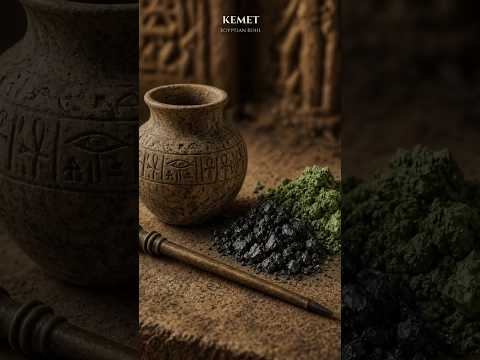
How did chemistry provide protection against the desert sun?
The blinding intensity of the sun reflecting off the desert sands presented a constant, physical threat to the eyes of ancient inhabitants. According to the Egypt Museum, the application of kohl served as a crucial shield against this glare, functioning much like the grease paint used by modern athletes to reduce visual strain. By darkening the skin immediately surrounding the eyes, the makeup effectively absorbed incoming light, reducing the harshness of the desert sun and allowing for better visibility in a high-glare environment.
Beyond the direct absorption of light, researchers also infer that this application provided a functional cooling effect, which offered a degree of relief in the extreme temperatures of the region. While some aspects of the cosmetic's efficacy are still under investigation, the practical benefit of glare reduction is widely accepted by those studying ancient material culture. The combination of galena’s physical properties and the strategic placement of the pigment helped the people of the Nile adapt to an environment that was often physically abrasive and difficult to endure.
This process demonstrates how the inhabitants of the Nile valley utilized their local resources to engineer a solution to environmental stressors. It is a testament to their practical understanding of light and heat that they identified a material which could simultaneously enhance their appearance and shield their sensitive ocular tissues from the sun's persistent intensity.
Was kohl used as a shield against insects and disease?
Ancient populations lived in close proximity to the insects of the Nile floodplains, which were known carriers of various eye infections. According to USC Dornsife, the use of kohl served as an effective deterrent against these pests, adding another layer of protective utility to the cosmetic. This dual role as a deterrent and a cooling agent allowed people to mitigate the risks of eye irritation and potential illness, which were persistent concerns in the ancient world.
While historic sources claim that the substance provided protection against a range of ailments, modern analysis focuses on how the chemical compounds within the kohl interacted with the skin. The presence of specific lead compounds in galena has been a point of significant interest for scholars, as there is evidence suggesting these compounds could trigger biological responses that helped the body defend against infection. Some researchers point to the way these substances might interact with the skin to produce specific chemical reactions, although the precise medicinal mechanisms remain a subject of ongoing study.
The belief that kohl protected against illness was not merely folklore; it was an integral part of their medicinal system. The challenge for modern scholars is to reconcile these ancient medicinal claims with the known toxicity of lead. We remain in a period of discovery, trying to understand whether the ancient applications were carefully regulated to maximize benefit while minimizing harm, or if the protective properties were simply observed outcomes of a practice maintained for broader cultural reasons.
What was the spiritual role of eye adornment?
Beyond the tangible benefits of sun protection and insect deterrence, the practice of wearing kohl held deep religious and social weight. According to the Egypt Museum, the act of applying Mesdemet was closely linked to the veneration of gods and was believed to offer protection against malevolent spirits. This suggests that the "beauty" of the Egyptian eye was intended to be as much a spiritual safeguard as it was an aesthetic or physical one.
The ritualistic application of the pigment likely served to reinforce communal identity and individual well-being through the lens of their mythology. By adorning their eyes, individuals were participating in a symbolic act that connected them to their deities. The fact that this practice was universal suggests that the spiritual protection offered by kohl was considered a necessity for all, regardless of their standing in the social hierarchy.
The evidence suggests that for the Ancient Egyptians, the cosmetic was not a luxury item but a vital component of both health and spiritual defense.
Because the practice dates back to at least 5000 BC, it is clear that the integration of beauty and utility was a foundational element of their culture for thousands of years. The persistence of these rituals across so many generations reflects a cohesive cultural worldview where the physical and the metaphysical were inextricably linked.
What do we still not know about these ancient recipes?
While the chemical analysis of the Petrie Museum collection has confirmed a wide range of ingredients, many of these substances are still being identified. The specific organic additives found in some kohl vessels remain a mystery, and researchers have yet to determine the exact intended purpose of every ingredient used. We do not yet know if these additions were intended for medicinal, cosmetic, or purely symbolic purposes.
There is also a lively debate regarding the long-term health effects of using lead sulfide, which is known to be toxic in certain concentrations. Modern scholars are currently navigating the tension between the apparent health benefits—such as the repulsion of insects and the prevention of infection—and the potential risks associated with the prolonged, direct application of lead-based minerals. It remains unknown if the Egyptians were aware of these toxic risks or if their formulations were designed to mitigate them in ways that we are only now beginning to recognize.
This area of study is essential for understanding whether the practice remained constant because of its benefits, or if it evolved in response to a growing knowledge of the chemical interactions involved. We are currently observing a gap between the archaeological evidence of what was used and the scientific understanding of exactly how those materials interacted with the human body. As analytical techniques improve, we may move closer to uncovering why these specific, potentially dangerous, minerals were chosen over safer alternatives.
Why does this evidence matter for our understanding of the past?
The study of kohl forces us to look past our modern biases, which tend to categorize substances as either "makeup" or "medicine." The artifacts found in excavations at Giza and other major sites, including the diverse contents of kohl jars, show that the ancients perceived these categories as one and the same. The separation of these concepts is a modern construct that often obscures our ability to fully appreciate the integrated nature of ancient life.
Every piece of evidence confirms that these objects were tools for navigating a difficult world rather than purely decorative items.
Understanding how ancient civilizations used chemistry to manage their environment allows us to see them as scientists and practical problem-solvers. This perspective encourages a deeper appreciation for the ingenuity of the Ancient Egyptians, who successfully thrived in an extreme climate through the careful, long-term application of natural resources. By treating their bodies with these minerals, they were engaging in a form of applied chemistry that bridged the gap between daily survival and cultural expression.
As we look to future research, the analysis of these residues will likely continue to reveal how the intersection of faith, health, and science defined the evolution of human society. By documenting these practices, we learn how human beings adapt their own bodies to meet the physical challenges of the landscapes they inhabit. Ultimately, the story of kohl is the story of human resilience—a testament to how a simple mineral, utilized with wisdom and ritual, became a defining feature of a civilization that lasted for millennia. The ongoing investigation into these recipes will continue to challenge our understanding of what constitutes a "cosmetic," reminding us that even the most mundane daily routines can be rooted in complex scientific and spiritual truths.
Watch the Kemet filmFirst published on Kemet (kemet-stories.pages.dev) · reference KMT-59ADCC
← Back to the archive